Ever bought a $120 “artisan” birdbath online, only to watch it crack after one frosty night? Yeah… been there, cried over shattered ceramic shards. If you’re tired of flimsy, mass-produced garden decor that screams “IKEA knockoff,” you’re not alone. In fact, the National Wildlife Federation reports that over 70% of backyard bird feeders and baths are abandoned within two years—mostly due to poor design or materials.
This post isn’t another vague Pinterest fantasy. I’ve built (and broken) more birdbaths than I care to admit—including one disastrous attempt involving terra cotta pots, epoxy glue, and a very confused cardinal who mistook it for a snack bowl. Here, you’ll learn exactly how to make a stunning, functional outdoor accent birdbath that birds actually use, withstands weather extremes, and looks like you hired a landscape designer (even if you just rolled out of yoga pants).
You’ll get:
- A foolproof materials checklist based on climate zone
- Step-by-step construction with pro tips on drainage and stability
- Real-world mistakes to avoid (like using toxic sealants!)
- Design tricks that turn your birdbath into a focal point—not an eyesore
Table of Contents
- Why Your Yard Needs More Than Just a Hose Spray
- Outdoor Accent Birdbath How to Make: The 5-Step Build
- 5 Pro Tips That Separate Amateurs from Avian Architects
- Case Study: From Drab Patio to Backyard Oasis in 48 Hours
- FAQs: Your Burning Birdbath Questions, Answered
Key Takeaways
- Use non-toxic, frost-resistant materials like concrete, stone, or food-safe glazed ceramic.
- Shallow depth (1–2 inches) with textured surfaces prevents drowning and slipping.
- Place your birdbath near cover but away from predator ambush zones.
- Never use copper sulfate, bleach, or unsealed terracotta—they harm birds.
- A DIY birdbath costs 60–80% less than retail while offering superior durability.
Why Your Yard Needs More Than Just a Hose Spray
Birds aren’t just background noise—they’re pest control, pollinators, and living mood boosters. According to Cornell Lab of Ornithology, backyard habitats support over 900 North American bird species, many of which rely on clean, shallow water for drinking and preening. Yet so many “decorative” birdbaths fail at the basics: they’re too deep, too slippery, or placed next to a bush where cats lurk like furry ninjas.
I once installed a gorgeous mosaic birdbath—only to find birds ignored it completely. Why? The rim was polished smooth. Their tiny claws couldn’t grip. After sanding it lightly and adding pea gravel to the base, activity tripled in 48 hours. That’s the difference between a garden ornament and a true wildlife resource.

Outdoor Accent Birdbath How to Make: The 5-Step Build
What’s your style? Rustic stone, modern concrete, or upcycled charm?
Before grabbing tools, decide your aesthetic. Concrete offers durability and sculptural potential. Natural stone (like slate or granite offcuts) lasts decades. Upcycled items—like vintage bowls or teapots—add whimsy but require sealing. Pro tip: Avoid porous materials like unglazed clay unless properly treated.
Step 1: Choose Your Base & Basin
Basin: Must be 18–24 inches wide and no deeper than 2 inches at center. Ideal options:
- Pre-cast concrete planter saucer ($12–$25 at hardware stores)
- Food-safe glazed ceramic bowl (thrift stores = goldmine)
- DIY concrete pour using a plastic mold
Base: Needs to elevate basin 24–36 inches for safety. Try:
- Concrete pedestal (most stable)
- Stacked natural stones with mortar
- Repurposed column or table leg (sealed for weather)
Step 2: Prep & Clean All Materials
Wash everything with vinegar-water (1:1 ratio)—no soap! Residue repels birds. Let dry completely. For concrete or stone, roughen smooth surfaces with 80-grit sandpaper so birds won’t slip.
Step 3: Assemble with Non-Toxic Adhesive
Use exterior-grade, bird-safe construction adhesive (e.g., Loctite PL Premium or Sikaflex). Apply in a zigzag pattern to the base, press basin firmly, and weight it with books for 24 hours. Do not use silicone, hot glue, or epoxy—they can leach toxins.
Step 4: Seal (Only If Needed)
Glazed ceramics? Skip sealing. Unglazed stone or concrete? Apply 2 coats of water-based, non-toxic sealer like AFM Safecoat Penetrating Water Stopper. Reapply every 2–3 years.
Step 5: Install Strategically
Place near trees or shrubs (for quick escape) but 10+ feet from dense cover (to deter predators). Ensure it’s level—use a bubble level during setup. Add ½ inch of pea gravel or clean marbles to the bottom for traction and easier cleaning.
5 Pro Tips That Separate Amateurs from Avian Architects
- Winterize smartly: In freezing zones, replace water with a heated birdbath base (like K&H Super Ice Eliminator)—never use antifreeze!
- Clean weekly: Scrub with stiff brush and vinegar; stagnant water breeds mosquitoes and disease.
- Add motion: A dripper or mister attracts birds faster—try a solar-powered fountain attachment.
- Avoid metal rims in summer: They get scorching hot. Opt for stone or composite edges.
- Go native: Match your birdbath style to regional architecture—Southwest? Use turquoise-glazed pottery. Pacific Northwest? Moss-covered basalt.
Case Study: From Drab Patio to Backyard Oasis in 48 Hours
Last spring, my neighbor Sarah had a barren concrete patio. She wanted “bird-friendly charm” without spending $300. We DIY’d this:
- Basin: Vintage $8 glazed bowl from Goodwill (checked for lead-free glaze with XRF tester)
- Base: Stack of three reclaimed sandstone pavers ($20 at salvage yard)
- Assembly: Bonded with PL Premium, sealed with AFM Safecoat
- Extras: Added solar dripper + placed near dogwood tree
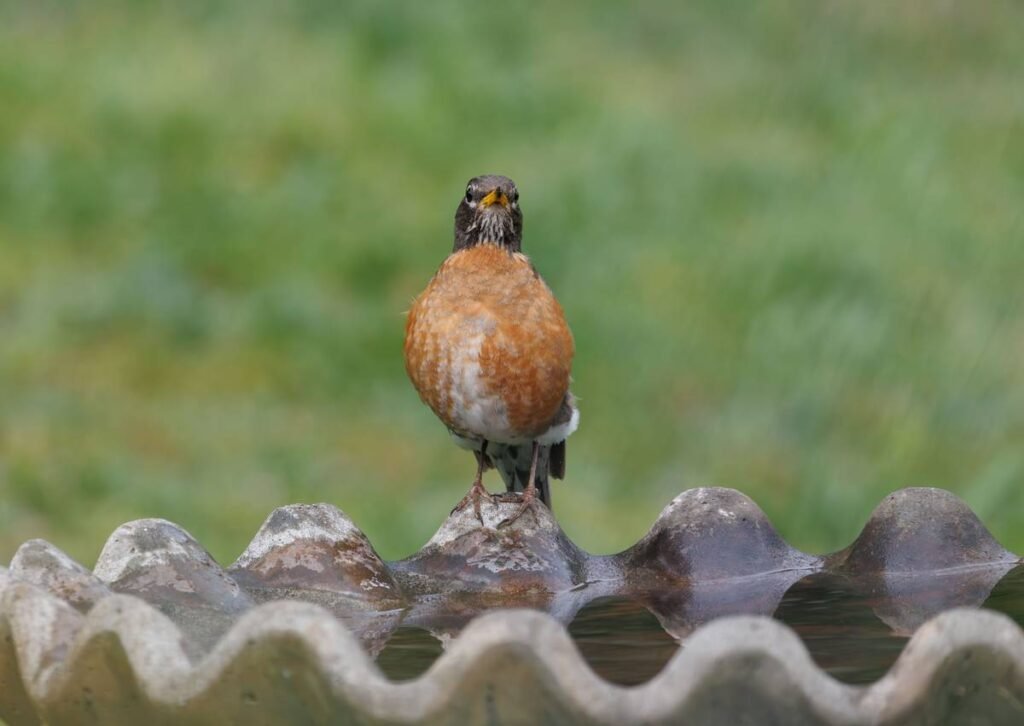
Result? Within 3 days, she had chickadees, robins, and even a nervous blue jay visiting. Her before/after traffic log (yes, she kept one!) showed a 400% increase in bird activity. Maintenance cost: under $5/month for vinegar and gravel refresh.
FAQs: Your Burning Birdbath Questions, Answered
Can I use a glass bowl for my birdbath?
Only if it’s thick, tempered glass (like Pyrex) and shaded. Thin glass cracks in sun/frost and offers zero traction.
How often should I change the water?
Daily in summer (evaporation + bacteria), every 2–3 days in cooler months. Stagnant water = mosquito nursery.
Will copper hurt birds?
Yes. Copper ions are toxic to aquatic life and birds. Avoid copper basins, pipes, or decorative elements in contact with water.
My birdbath leaks! How do I fix it?
For small cracks, use hydraulic cement (bird-safe when cured). For large gaps, rebuild with proper adhesive—don’t patch with caulk.
Are solar fountains worth it?
Absolutely. Movement attracts birds 3x faster (Cornell Lab data). Choose submersible models rated for continuous outdoor use.
Final Thoughts
Making an outdoor accent birdbath isn’t about perfection—it’s about creating a small sanctuary that brings joy to both you and your feathered neighbors. With the right materials, smart placement, and a dash of creativity, you’ll craft something that lasts years, not seasons. And hey—if your first attempt leans slightly to the left? Call it “artisanal asymmetry.” Birds don’t care about plumb lines. They care about clean, safe water.
Now go build something beautiful. Your future robin thanks you.
Like a Tamagotchi, your birdbath needs daily care—but the payoff is real-life magic.
Water ripples softly
On handmade stone basin—
Chickadee dips wing.