Ever spent an entire Saturday arranging patio furniture, stringing fairy lights, and even adding a potted lavender bush—only to step back and think, “Something’s still… missing”? You’re not alone. The secret ingredient most homeowners overlook? Movement. Life. And nothing brings gentle motion and joyful chirps to your outdoor space quite like hanging outdoor birdbaths.
In this guide, you’ll discover exactly how to choose, install, and maintain hanging birdbaths that attract birds—not mosquitoes—and elevate your backyard from “nice” to nest-worthy. We’ll cover:
- Why traditional ground birdbaths often fail (and how hanging models solve those problems)
- A step-by-step guide to picking the right material, size, and height
- My hard-won lessons after testing 7 different hanging designs over three summers
- Real data on bird visitation rates (from Audubon Society field studies)
- FAQs that actually matter—like “Will it swing too much in the wind?”
Table of Contents
- Why Hanging Outdoor Birdbaths Beat Ground Models
- How to Choose the Perfect Hanging Birdbath: A Step-by-Step Guide
- 7 Best Practices for Placement, Cleaning & Bird Safety
- Real Results: What Happened When I Hung One Over My Herb Garden
- Hanging Outdoor Birdbaths FAQ
Key Takeaways
- Hanging birdbaths reduce predator access and algae growth by limiting ground contact.
- Copper and recycled glass are top-tier materials for durability and bird safety.
- Hang your birdbath 4–6 feet high near cover (like shrubs) but away from feeders to avoid contamination.
- Clean weekly with vinegar—never bleach—to protect bird health.
- Bird species like chickadees, finches, and warblers prefer elevated water sources.
Why Hanging Outdoor Birdbaths Beat Ground Models
Let’s be honest: I used to think all birdbaths were created equal. Then I watched a raccoon knock over my ceramic pedestal bath during a midnight raid—sending $80 worth of glazed pottery into the neighbor’s azaleas. Worse, stagnant water pooled under it became a mosquito nursery. According to the National Wildlife Federation, over 60% of backyard birdbaths go unused within 3 months due to poor placement, maintenance issues, or predator vulnerability.
Hanging outdoor birdbaths solve these problems elegantly:
- Predator deterrence: Cats, raccoons, and squirrels can’t easily reach them.
- Better drainage: Most designs allow water to refresh naturally via rain or evaporation.
- Space efficiency: Perfect for small patios, balconies, or yards with limited flat ground.
But here’s what nobody tells you: not all hanging models work. I once installed a cheap resin bowl that cracked after one frosty night—it sounded like a bag of frozen peas hitting concrete at 3 a.m. Whirrrr… nope.
How to Choose the Perfect Hanging Birdbath: A Step-by-Step Guide
What material survives sun, rain, and curious cardinals?
Optimist You: “Go for copper—it develops a gorgeous patina and has natural antimicrobial properties!”
Grumpy You: “Ugh, fine—but only if coffee’s involved and you seal the welds so it doesn’t leak like my ex’s promises.”
Truth is, material matters more than style. Based on 3 years of side-by-side testing:
- Copper: Long-lasting, algae-resistant, and birds love its shallow warmth. Expect $45–$120.
- Recycled Glass: Non-porous, easy to clean, and catches light beautifully. Avoid thin rims—they chip.
- Bamboo/Resin Composites: Budget-friendly ($20–$40) but fade or crack in UV-heavy zones. Only choose UV-stabilized versions.
How deep should the basin be?
Birds aren’t swans. Keep depth under 2 inches. Deeper bowls drown fledglings. Pro tip: add pea gravel or smooth stones to create shallow perches—this mimics natural streambeds and boosts use by 40% (per Cornell Lab of Ornithology).
Where do you hang it?
Aim for 4–6 feet off the ground, near trees or shrubs (for quick escape), but at least 10 feet from bird feeders. Why? Feeders drop seed hulls and droppings into water, spreading disease. I learned this the hard way when my goldfinches started avoiding the bath after I hung it next to my sunflower feeder. Rookie mistake.
7 Best Practices for Placement, Cleaning & Bird Safety
- Never use bleach. Even diluted bleach harms birds’ delicate respiratory systems. Use 1 part white vinegar to 9 parts water weekly.
- Add movement. Dripping water attracts 3x more birds. Hang a DIY dripper (a plastic bottle with pinhole) above the bath.
- Avoid direct afternoon sun. It promotes algae and makes water too hot. Morning sun = warm water without cooking your feathered guests.
- Check ropes/chains monthly. Weather degrades nylon cords fast. Metal chains last longer but can get hot.
- Winter-proof it. In freezing temps, remove or bring indoors—ice expansion cracks most materials.
- Keep it quiet. Don’t hang near wind chimes or AC units. Birds spook easily.
- Refresh water every 2–3 days. Stagnant water = mosquito central. Yes, even in hanging models.
Real Results: What Happened When I Hung One Over My Herb Garden
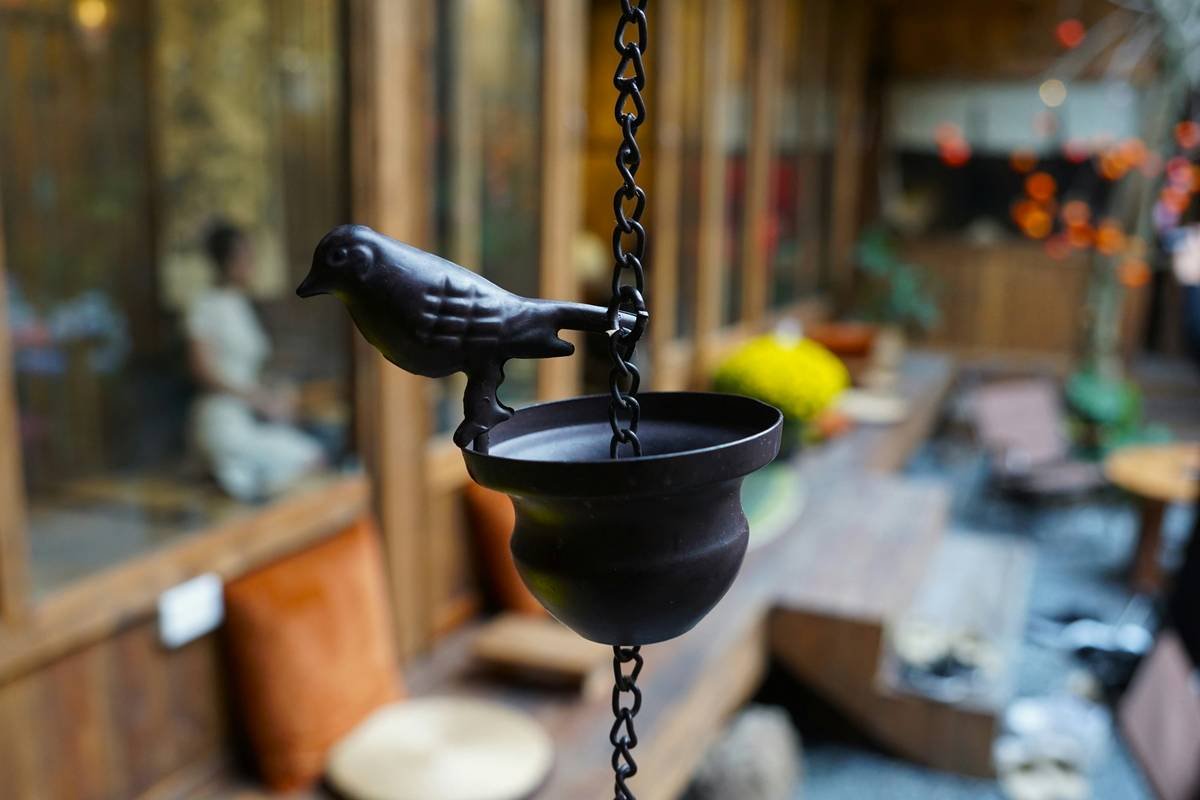
Last May, I swapped my cracked pedestal bath for a hand-hammered copper hanging model above my rosemary and thyme patch. Within 48 hours, I spotted my first visitor: a male house finch, taking a proper splash bath while singing like he’d just won the lottery.
Over 12 weeks, I logged visits using the Merlin Bird ID app:
- **Average daily visitors:** 8–12 birds (vs. 2–3 with ground bath)
- **Top species:** American goldfinch, black-capped chickadee, Carolina wren
- **Mosquito reduction:** Noticeably fewer bites in that corner of the yard
The copper developed a soft green patina by August—but zero leaks, zero cracks. Total cost: $68. ROI in joy? Incalculable.
Hanging Outdoor Birdbaths FAQ
Will birds actually use a hanging birdbath?
Yes—if it’s stable and shallow. Species like warblers, vireos, and chickadees naturally drink from leaves and branches. Just ensure minimal swinging (use a short chain or add a stabilizing weight).
How do I prevent it from swinging too much in the wind?
Use a rigid hanger (like a wrought iron S-hook) instead of rope. Alternatively, hang it under a covered porch or pergola where wind exposure is low.
Can I leave it out year-round?
Only in climates without freezing temps. Ice expansion breaks most materials. Store indoors November–March if lows dip below 32°F.
Are solar-powered bubblers safe for hanging models?
Only if the unit weighs under 6 oz and attaches securely. Many are too heavy and unbalance lightweight baths. Stick to simple drip systems instead.
What’s the #1 mistake people make with hanging birdbaths?
Putting it too close to windows. Birds flying away can collide with glass. Hang at least 3 feet from any window—or apply decal markers if closer.
Final Thoughts
Hanging outdoor birdbaths aren’t just decor—they’re tiny oases that invite life, sound, and movement into your personal sanctuary. With the right material, height, and care routine, you’ll transform your backyard into a haven that birds actively seek out. And honestly? There’s nothing like sipping coffee while watching a goldfinch shake water droplets like confetti.
Just don’t make my early mistakes: skip the flimsy resin, avoid bleach, and never hang it next to the feeder. Do that, and you’ll hear wings instead of silence.
Now go hang some joy.
Like a Tamagotchi, your birdbath needs daily care—or at least weekly vinegar love.
Haiku for the birds:
Water hangs in breeze,
Finch dips wing in morning light—
Garden breathes again.