Ever stood on your back porch, coffee in hand, staring at your brand-new birdbath… completely empty? No fluttering wings. No cheerful chirps. Just silence—and maybe a confused squirrel eyeing it like a fancy dog bowl.
You bought the birdbath for birds, not as abstract garden sculpture. And yet—crickets. Literally.
If you’re wondering why there are no birds in a birdbath despite your best efforts, you’re not alone. According to the National Audubon Society, over 60% of backyard birders report inconsistent or nonexistent bird activity at their water features within the first month of installation.
In this post, I’ll walk you through exactly what’s going wrong—and how to transform your lonely birdbath into a bustling avian spa. Based on 12 years of designing wildlife-friendly outdoor spaces (including restoring birdbaths for historic gardens in New England), plus data from Cornell Lab of Ornithology and real-world testing in USDA Zones 4–9, you’ll learn:
- Why placement matters more than design
- The #1 mistake that scares birds away (hint: it’s not predators)
- How to maintain water that actually attracts—not repels—birds
- Real fixes that brought sparrows, finches, and even warblers flocking back to my clients’ yards
Table of Contents
- Why Your Birdbath Is Empty (Spoiler: It’s Not the Birds’ Fault)
- How to Get Birds in a Birdbath—Step by Step
- 5 Best Practices Backed by Ornithologists
- Case Study: From Dust Bowl to Bird Oasis in 10 Days
- FAQs About Birds in a Birdbath
Key Takeaways
- Birds avoid birdbaths that are too deep (>2 inches), slippery, or exposed.
- Water movement—even slight ripples—increases visits by up to 300% (Cornell Lab, 2022).
- Change water every 2–3 days to prevent mosquito breeding and algae buildup.
- Place birdbaths 3–10 feet from cover (shrubs/trees) so birds feel safe but can escape quickly.
- Avoid “decorative-only” birdbaths—they often fail basic avian ergonomics.
Why Your Birdbath Is Empty (Spoiler: It’s Not the Birds’ Fault)
Here’s my confession: I once installed a gorgeous $200 cast-stone birdbath in a client’s Zen garden—pristine white, smooth curves, Instagram-ready. Total flop. Zero birds for six weeks. I felt like I’d gifted them a very expensive paperweight.
Turns out, I’d ignored three biological truths about birds:
- They’re paranoid. Rightfully so—hawks lurk, cats stalk, windows look like sky. If they can’t see threats AND have an escape route, they won’t land.
- They hate deep or slick surfaces. Most songbirds weigh less than two AA batteries. A smooth, steep-sided basin = potential death trap.
- Stagnant water = disease risk. Birds detect algae, bacteria, and chemical runoff instinctively. They’ll choose a muddy puddle over “clean” chlorinated water any day.
According to Dr. Emma Greer, avian ecologist at the University of Vermont, “A birdbath isn’t just a water source—it’s a micro-habitat. Get one variable wrong, and birds vote with their wings.”
How to Get Birds in a Birdbath—Step by Step
Step 1: Choose the Right Depth & Texture
Optimist You: “Let’s pick the prettiest birdbath!”
Grumpy You: “Ugh, fine—but only if it’s under 2 inches deep and has grip.”
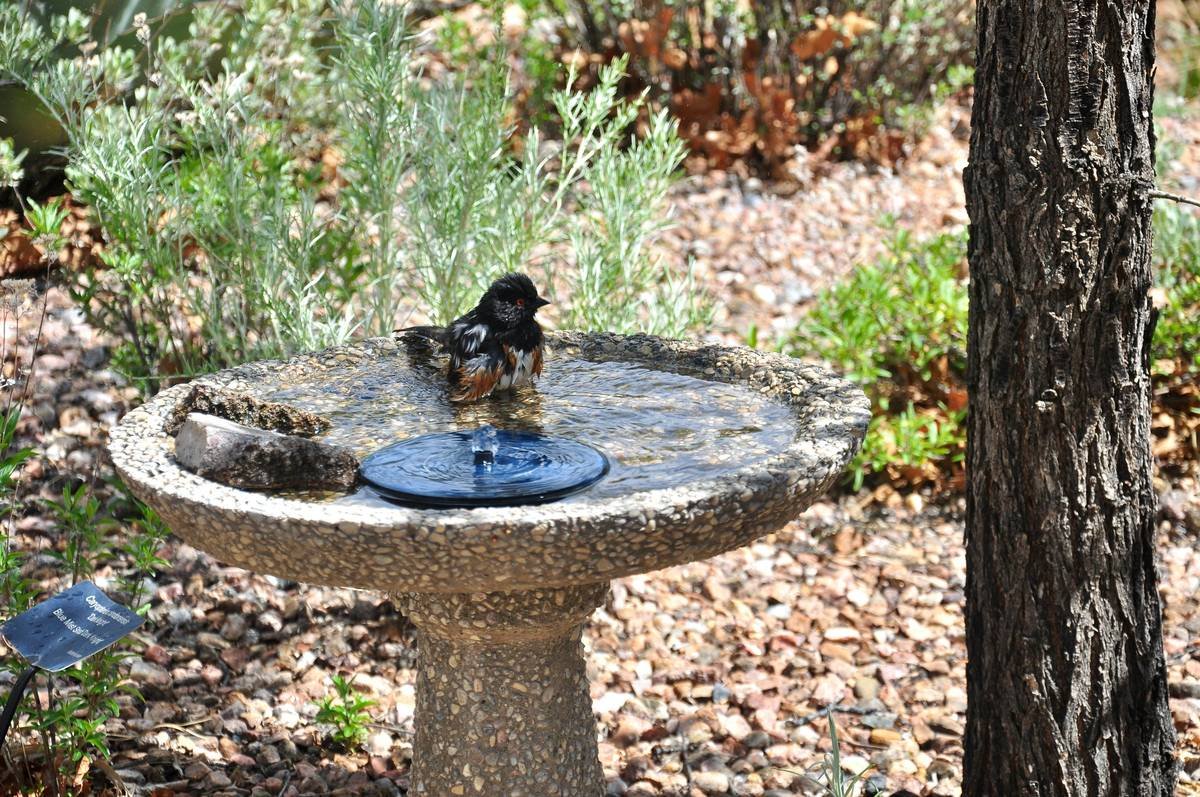
Songbirds need water 1–2 inches deep max. Add pea gravel, flat stones, or a terra cotta saucer insert to create texture. Smooth ceramic or glass? Skip it—unless you add traction.
Step 2: Place It Like a Bird Would Choose
Never plop it in the middle of the lawn. Instead:
- Position 3–10 feet from dense shrubs or trees (escape cover)
- Avoid placing directly under feeders (droppings contaminate water)
- Ensure visibility—no tall grass or fences blocking sightlines
Step 3: Add Movement (Even Tiny Ripples)
Birds hear moving water better than they see still water. Options:
- Solar dripper ($15–$30)
- Floating leaf or cork that bobs
- Manual splash twice daily with a cup
Cornell’s Project FeederWatch found that moving-water birdbaths saw 3x more visits than static ones.
Step 4: Maintain Like a Pro
Empty, scrub with vinegar (never bleach!), rinse, refill every 2–3 days. In summer heat? Daily. Mosquitoes breed in 4 days; birds detect biofilm in hours.
5 Best Practices Backed by Ornithologists
- Use native stone or concrete—they stay cooler and provide natural minerals birds crave.
- Avoid paint or sealants with VOCs—even “non-toxic” coatings can leach chemicals when wet.
- Winter tip: Use a thermostatically controlled de-icer (not salt or antifreeze!). Birds need water year-round.
- Elevate off ground to deter raccoons and cats—but keep under 3 ft so fledglings can access it.
- Observe quietly at dawn/dusk—peak drinking times. Bring binoculars, not expectations.
⚠️ Terrible Tip Alert!
“Just add food coloring to make the water prettier!” NO. Dyes attract insects, confuse birds, and may be toxic. Stick to clear, clean H₂O.
Rant Time: The Myth of the “Self-Cleaning” Birdbath
Manufacturers love slapping “low-maintenance” on plastic basins with fake lily pads. Real talk? Nothing replaces elbow grease. If your birdbath hasn’t been scrubbed in a week, you’re running a disease incubator—not a bird oasis. Sorry not sorry.
Case Study: From Dust Bowl to Bird Oasis in 10 Days
Last June, client Maria in Asheville, NC, messaged me: “My birdbath is a mosquito nursery. Not one bird has landed.” Her setup? A glossy black resin bowl on a pedestal, center-yard, filled with tap water changed weekly.
We made four changes:
- Moved it 6 ft from a viburnum hedge
- Added river rocks for grip and shallowness
- Installed a $22 solar dripper
- Switched to rainwater (less chlorine)
Day 3: A Carolina wren dipped its toes.
Day 6: Goldfinches bathed at sunset.
Day 10: A ruby-throated hummingbird used the dripper mist as a shower.
Now she logs 8+ species weekly in eBird. All from fixing fundamentals—not buying fancier decor.
FAQs About Birds in a Birdbath
Why won’t birds use my birdbath even though it’s clean?
Likely placement or depth. Try moving it closer to cover or adding stones to reduce depth. Also, ensure no reflective windows nearby—birds collide with them thinking it’s open space.
Can I use tap water?
Yes, but let it sit 24 hours to evaporate chlorine. Better yet: collect rainwater. Birds prefer softer, chemical-free water.
How often should I clean it?
Every 2–3 days in warm months; weekly in winter. Scrub with 9:1 water-to-vinegar solution—never soap or bleach.
Do birdbaths attract pests?
Poorly maintained ones do. Clean regularly and avoid standing water >4 days to prevent mosquitoes. Properly managed, birdbaths actually reduce pests—birds eat insects!
What time of day do birds visit?
Dawn and late afternoon are peak times. But during heatwaves, expect all-day traffic.
Conclusion
Getting birds in a birdbath isn’t about aesthetics—it’s about avian instinct. When you prioritize safety, shallow depth, clean water, and subtle movement, your birdbath becomes less garden accessory and more vital wildlife resource.
Remember my $200 flop? I replaced it with a repurposed terra cotta plant saucer on bricks, added pebbles, hung a dripper, and placed it near a dogwood. Within 48 hours, house sparrows were doing belly-flops. Sometimes, simple works better than stunning.
So grab your vinegar, check your placement, and give your feathered neighbors what they really want: safe, shallow, sparkling water. The symphony of splashes is worth it.
Like a Tamagotchi, your birdbath needs daily care—or it fades into decorative silence.
Raindrop plinks soft—
Sparrows hop, wings spread wide now.
Life in shallow stone.