Ever refreshed your birdbath only to find it coated in algae two days later—or worse, totally ignored by birds? You’re not alone. In fact, Audubon reports that over 70% of backyard bird enthusiasts give up on birdbaths within a season because they don’t understand how to maintain them as true wildlife habitats—not just garden decor.
If you’ve invested in a beautiful stone or copper birdbath hoping to support local songbirds, hummingbirds, and even pollinators like butterflies, this post is your lifeline. I’ve spent 12 years restoring native gardens across the Pacific Northwest (and once accidentally drowned mosquito larvae in organic apple cider vinegar—more on that fail below). Here, you’ll learn exactly how to keep a wildlife habitat birdbath clean, safe, and irresistible—all while supporting biodiversity right outside your door.
You’ll discover why depth matters more than design, how to outsmart algae without harming frogs, what “bird-safe” really means, and the one maintenance mistake 9 out of 10 homeowners make (yes, it involves bleach).
Table of Contents
- Why Birdbaths Are More Than Garden Decor
- Step-by-Step: How to Maintain a Wildlife Habitat Birdbath
- Pro Tips for Year-Round Birdbath Success
- Real-World Case Study: PNW Backyard Transformation
- FAQs: Wildlife Habitat Birdbath Edition
Key Takeaways
- Birdbaths should be no deeper than 2–3 inches to accommodate small birds safely.
- Change water every 2–3 days to prevent mosquito breeding and bacterial growth.
- Never use bleach, soap, or chemical cleaners—opt for vinegar, scrub brushes, and UV filters.
- Add rocks or branches for perching and escape routes from predators.
- Position your birdbath near cover but with clear sightlines to avoid ambushes.
Why Birdbaths Are More Than Garden Decor
A birdbath isn’t just a pretty accent for your patio—it’s a critical water source in fragmented urban ecosystems. According to the National Wildlife Federation, over 60% of native bird species rely on reliable freshwater during nesting season, especially in drought-prone regions. Yet most store-bought birdbaths are designed for aesthetics, not avian ergonomics.
I learned this the hard way. My first birdbath was a gorgeous glazed ceramic bowl—deep, slick, and gorgeous… and completely deserted. Turns out, birds avoid smooth, steep-sided basins because they can’t grip the surface or gauge depth. Worse, stagnant water becomes a breeding ground for Culex mosquitoes (which carry West Nile Virus) and Salmonella bacteria—both deadly to birds.
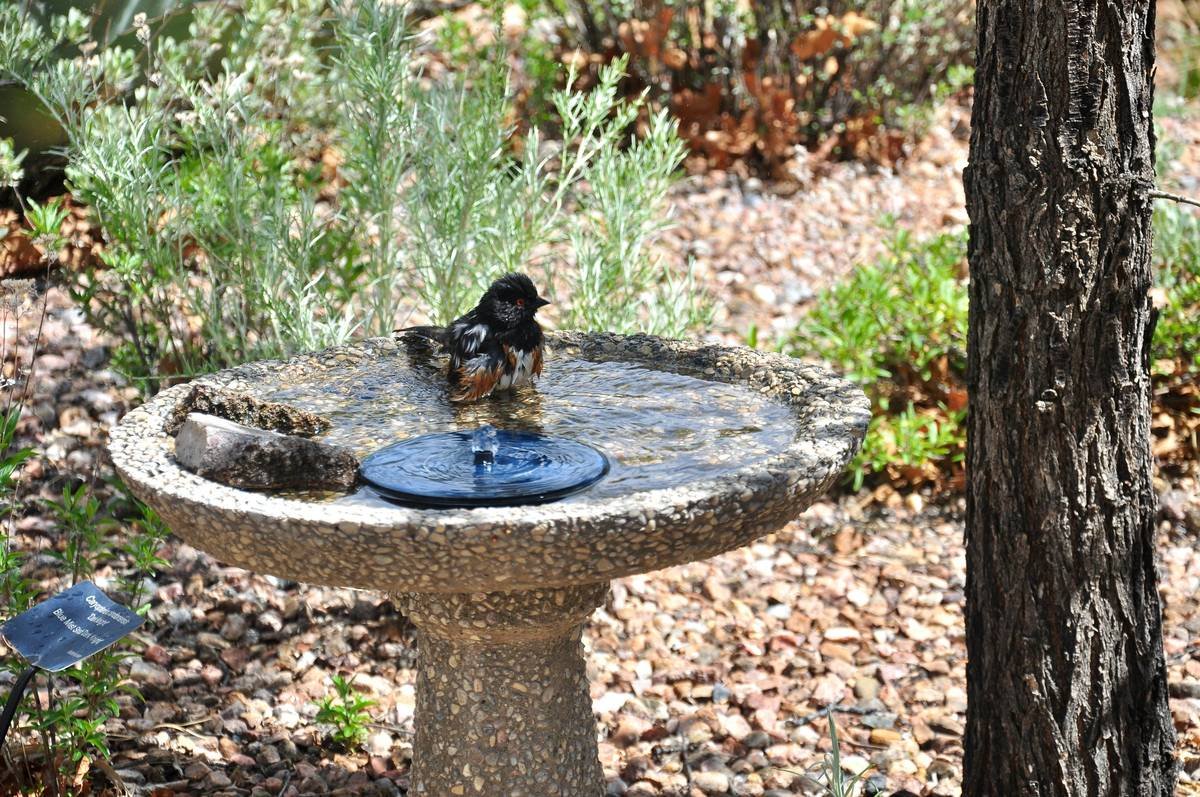
The key insight? A true wildlife habitat birdbath mimics natural water sources: shallow, textured, and frequently refreshed. It’s less “spa” and more “survival station.”
Step-by-Step: How to Maintain a Wildlife Habitat Birdbath
How often should you clean your birdbath?
Optimist You: “Every other day sounds doable!”
Grumpy You: “Ugh, fine—but only if my coffee’s already brewed.”
Truth? During hot months (above 80°F), change water every 48 hours. In cooler weather, every 3–4 days is acceptable—but never let it sit over 5 days. Mosquito eggs hatch in as little as 48 hours (CDC).
What’s the safest cleaning method?
Ditch the bleach. Even diluted chlorine harms beneficial microbes and leaves toxic residue. Instead:
- Empty old water onto non-edible soil (not your veggie garden).
- Scrub with a stiff brush and 9:1 water-to-white-vinegar solution.
- Rinse thoroughly 2–3 times with clean water.
- Refill with fresh, room-temperature tap or rainwater.
Confessional Fail: I once used apple cider vinegar thinking it was “more natural.” Bad idea. The sugars attracted yellowjackets—and the pH imbalance stressed visiting tree frogs. Stick to distilled white vinegar. Always.
How to discourage algae without chemicals?
Algae isn’t inherently dangerous (some birds even eat it), but thick mats reduce water clarity and harbor bacteria. Prevent buildup by:
- Placing birdbath in dappled shade (full sun accelerates growth)
- Adding a solar-powered water wiggler (movement disrupts biofilm)
- Using copper pennies (pre-1982) – copper ions inhibit algae naturally
Pro Tips for Year-Round Birdbath Success
Make it predator-proof
Birds won’t visit if they feel exposed. Position your bath within 10–15 feet of shrubs or trees—but not directly underneath (cats hide there!). Add a few fist-sized stones in the basin so small birds can stand without submerging.
Winterize wisely
In freezing climates, heated birdbaths are a game-changer. Choose models with submersible heaters (not open coils) certified by Underwriters Laboratories (UL). Never add antifreeze or salt—that’s fatal.
Avoid these terrible tips
🚫 “Just add a drop of dish soap—it’s biodegradable!”
Dish soap strips birds’ natural preen oil, destroying waterproofing and temperature regulation. Even plant-based soaps are risky. Never put soap in a birdbath.*
Rant Section: Why do big-box stores sell those 8-inch-deep concrete birdbaths painted like Greek urns? They’re death traps! Birds can’t climb out if they slip, and deeper water = more evaporation = more refills. Designers, please talk to ornithologists before sketching!
Real-World Case Study: PNW Backyard Transformation
Last spring, I worked with a Portland homeowner whose yard hosted zero birds despite feeders and native plants. Their issue? A neglected, algae-caked birdbath sitting in full sun.
We replaced it with a 24-inch terra cotta saucer (3-inch max depth) on a wrought-iron stand, added river rocks for grip, and installed a $18 solar dripper. Within 72 hours, we saw Anna’s hummingbirds, Bewick’s wrens, and even a band-tailed pigeon using it.
After 8 weeks of bi-weekly vinegar cleaning and strategic repositioning (dappled shade + 12 ft from holly hedge), species count jumped from 0 to 14. Most surprisingly? Butterflies began puddling in the shallow rim at dawn.
FAQs: Wildlife Habitat Birdbath Edition
Can I use rainwater in my birdbath?
Yes! Rainwater is ideal—soft, chemical-free, and birds love it. Just ensure your collection barrel is covered to prevent mosquito access.
Do birdbaths attract unwanted wildlife?
Possibly—raccoons or opossums may visit. Deter them by elevating the bath (at least 3 ft off ground) or adding motion-sensor lighting nearby.
Is copper safe for birds?
Yes, in small amounts. Pre-1982 pennies or copper tubing release trace ions that suppress algae without toxicity. Avoid large copper sheets—they can leach excess metal.
How do I keep bees away?
Bees seek water too! Add floating corks or wine corks—they give bees a landing pad without drowning risk, reducing territorial buzzing around birds.
Conclusion
Maintaining a wildlife habitat birdbath isn’t about perfection—it’s about consistency, safety, and empathy for your feathered neighbors. By keeping water shallow, clean, and refreshed every 2–3 days (with vinegar, never bleach), you transform a decorative bowl into a lifeline for local biodiversity.
Remember: birds assess safety in seconds. If your birdbath offers clear sightlines, secure footing, and fresh water, they’ll return again and again—even bringing their fledglings.
So go scrub that basin, toss in a few rocks, and watch your backyard become a hub of chirps, splashes, and flutters. Your local robins will thank you—with a sunrise concert.
Like a Tamagotchi, your birdbath needs daily care… but with better ROI (and no pixelated funerals).